

Latest Products



Contact Us
Add: No.21, D Zone Jingjinluji Industry Park, Xingfu Road, Dezhou City, Shandong, China
Whatsapp/Wechat: +8615165964868
SKYPE: susanleeguobin
Email: dzguanlu@dzguanlu.com
Official webiste: www.dzgljc.com
What Is Deep Hole Tools
Deep hole tools are specialized drilling and machining devices designed for creating holes with depths significantly greater than their diameters. These tools are engineered to maintain precision, straightness, and surface quality in deep holes, which can be challenging due to the long tool lengths and the forces involved.
Why Choose Us
Strong Machining Facility
Germany Heckert rail Grinder to assure the accuracy of machine bed. Chinese famous brand Planner, VMC, milling machine, boring machine, lathes.
Strong Technician And Experienced Assembling Team
Nationally famous technician teams are in our factory, who are good at design customized deep hole machines, heavy duty deep hole machines and high automatically deep hole machines.
Excellent After Sale Service
You can find us any time.7x24hours response system. No matter enquiry for new machine or after service for sold machine, our team will be responded within 7 hours. 《Machine quality assurance Contract》and 《After sale service contract》will be signed.
One-stop Solution
Offer best solution to customers.Answer all doubts for customers,provide photos,videos of the machine.
 Deep Hole Honing Head | Precision Internal Finishing Honi...
Professional deep‑hole honing head designed for precision finishing of inner bore surfaces.Improves workpiece surface finish, dimensional accuracy and roundness.Widely used for hydraulic cylinders,
Add to Inquiry Hot Sales BTA Deep Hole Drilling Head
Product Description Model NO.: Deep hole drill head Movement Method: Contour Control Numerical Control: CNC/MNC Trademark: Guanlu Origin: China Process Usage: Metal-Cutting CNC Machine Tools Control
Add to Inquiry Skiving roller Burnishing Tools
Skiving roller Burnishing tools, The combined skive burnishing tool can process cylindrical tubes and other workpieces in a short time, and can be processed in one operation. Using a
Add to Inquiry Deep Hole drilling Tools
Deep hole drilling tools, The BTA drill head belongs to internal chip drill head. It consists of a cutter body, a guide key, a blade and a screw(If the hole diameter more than Ø65mm it also includes
Add to Inquiry Combined Skive Burnishing Tool
Combined skive burnishing tool The combined skive burnishing tool can process cylindrical tubes and other workpieces in a short time, and can be processed in one operation. Since the scraping and
Add to Inquiry BTA Drilling Head
BTA drill head The BTA drill head belongs to internal chip drill head. It consists of a cutter body, a guide key, a blade and a screw(If the hole diameter more than Ø65mm it also includes Support
Add to Inquiry Honing Head
Honing head Our honing heads are used for deep hole finishing to improve the surface finish of the workpiece. The honing head can rough or finish the hole or super finish. For workpieces with high
Add to Inquiry Roller Burnishing Tools
Roller burnishing tools The combined skive burnishing tool can process cylindrical tubes and other workpieces in a short time, and can be processed in one operation. Since the scraping and rolling
Add to Inquiry
Key features and types of deep hole tools include:
Gun Drills: These are the most common type of deep hole drills, characterized by a single-flute design with internal cooling channels. The gun drill has a twist drill at one end and a tapered shank that provides stability. Coolant is delivered through the drill to the cutting area under pressure.
Boring Bars: Used for enlarging existing holes to precise dimensions, boring bars are long, slender rods that support the cutting tool at the tip. They are often used in CNC machines and can be equipped with various types of cutting inserts.
Deep Hole Drills (DHDs): Similar to gun drills but with multiple flutes, DHDs are used for smaller diameter holes. They can be single-lip or multi-lip, with the latter providing better chip evacuation.
Micro Deep Hole Drills: These are specially designed for creating very small deep holes with precision. They are often used in medical and aerospace applications.
Ejector Drills: These tools feature an ejector mechanism at the shank end to remove chips produced during drilling. This is crucial for maintaining hole cleanliness and preventing tool breakage.
Peelers: Peeler drills are used for creating holes with a smooth finish and minimal taper. They have a unique design with a helical flute that wraps around the body of the drill, peeling off chips as it cuts.
Deep hole tools must be precisely engineered to handle the challenges of deep hole drilling, such as chip evacuation, tool deflection, and heat removal. Proper lubrication and cooling are critical to prevent tool wear and ensure the integrity of the workpiece. Specialized deep hole drilling machines are often used to provide the necessary rigidity and control during the machining process.
An Insight Into BTA Deep-Hole Drilling
The BTA self-piloting drilling process can machine bores from 18mm in diameter with length-to-diameter ratios of up to 100 or more.
"The BTA process - also known as the single-tube system or STS - covers deep-hole solid drill heads, pull-boring and counterboring heads, step and form boring tools and trepanning heads."
These different tool head types - each providing a more effective deep-hole production solution than conventional drilling and boring - need to be appropriately configured and applied to achieve optimum results, which is why formed its BTA Application Centre.
Mr Barker says: "Due to its configuration and hole size capability, BTA drilling requires more power than gun-drilling; and while both drill from solid, using high-pressure coolant to directly lubricate the cutting zone and evacuate chips away from the head of the drill, there is a marked difference in the design of a gun-drill and a BTA tool.
Gun-drilling uses a solid-carbide tool head brazed to a tube, through which coolant is pumped under pressure to the cutting edge of the tool head.
Chips are evacuated via a deep V-shaped flute in the drill head extending back along the exterior of the tube between the drill and the drilled portion of the workpiece.
"The BTA system has a rigid drill head - with either brazed solid-carbide or indexable inserts - that is secured to a support and feed tube.
"Coolant is pumped under pressure to the cutting edge between the outside of the tube, the cutting head and the newly created bore in the workpiece material.
"This pressure forces the chips to be flushed back through the drill head, tube and machine spindle to be collected. In both BTA and gun-drill systems, guide pads in the drill head support the cutting action, enabling continuous feed rates to be applied straight, and round accurately sized holes with high degrees of surface finish to be achieved."
Machining stability
Mr Barker goes on to explain that because chips are evacuated through the internal bore of the BTA drill head and tube, fluting or grooving is not required; this provides a greater cross-section of tool that increases rigidity and hence stability under cutting conditions.
Meanwhile, pull-boring is a BTA-based process used to accurately enlarge existing through bores to maintain - for instance - a constant wall thickness, tolerance or surface finish.
The process uses a tensioned BTA boring head but with the wear pads set ahead of the cutting inserts, so that the cutting tool can be pulled back through the workpiece.
Counterboring is an effective use of BTA technology to open up existing pre-bored holes. Here, the BTA drill head can achieve a more-precise diameter or concentricity of a bore - or provide an additional feature such as a bearing or oil seal diameter.
While gun-drilling can be used to machine bores as small as 0.5mm in diameter, BTA holes start at 18mm due to the size required for the drill tube; and as mentioned earlier, the use of trepanning-style heads extends the BTA concept to bore diameters up to 1,000mm.
The trepanning operation also produces a central core of material that can be used to make further components, and it is particularly economic when processing high-value materials.
BTA drill heads are larger in diameter than the rigid tube into which they are screwed.
Moreover, the construction of the tool means it can be used for drilling difficult materials such as exotic alloy steels and stainless steels - and at penetration rates several times greater than conventional drill types.
What is BTA Drilling
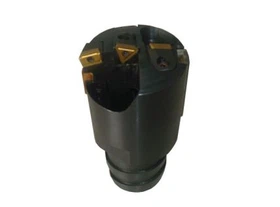
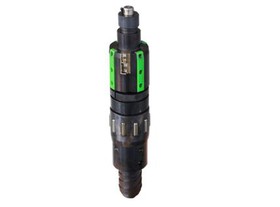
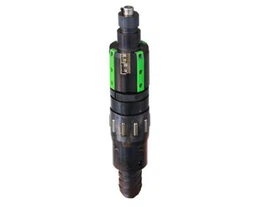
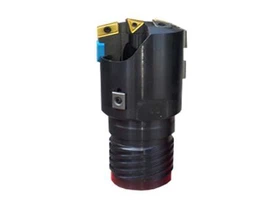
BTA stands for Boring and Trepanning Association, who are the originators of this method for deep hole drilling. The BTA drilling process, also known as STS or single tube system, requires a supply of high pressure coolant and uses a drill head attached to the end of a hollow drill tube.
In this drilling method, high pressure coolant is forced though the area between the newly drilled hole and the outer surface of the drill tube (also known as "oil room"). To facilitate this, a pressure head is used to provide a high pressure seal between the entry side of the work piece and the guide. The flow of coolant not only provides lubrication to the drill head during cutting but forces the metal chips to flow out through the inner diameter of the tube, then out the machine spindle. Because chips are evacuated through the interior instead of the exterior, the drill tube does not require any type of fluting or grooving to carry the chips away. The resulting cross-section increases the rigidity to the system, enabling it to achieve depth to diameter ratios in excess of 100.
The drill head performs the actual metal removal. It consists of guide pads and carbide cutting tool inserts, giving some drill heads an appearance not unlike that of a face milling cutter. The drill head screws onto the end of the drill tube, and is always larger in diameter than the drill tube. Note that the minimum hole diameter for BTA is 20 mm because of the minimum feasible size of the drill tube.
BTA drilling differs from the gun drilling in several respects. For example, in BTA drilling, the high pressure coolant flows outside the tool, carrying the chips away through the inside of the tool; in gun drilling the coolant flows inside the tool and carries the chips away along the outside surface. In gun drilling, the tool is fluted or has a deep V-groove cut into to assist with carrying away the chips, but in BTA drilling this is not needed, making the system more rigid and adapted to cutting holes with higher depth to diameter ratios. One of the advantages of BTA drilling over gun drilling is that the drill head has cutting tool inserts, making it easier to sharpen the cutting surface of the inserts (or replace the inserts, if needed) and continue with the drilling process.
BTA drilling is best used for holes with diameter ranging from 20 mm to 630 mm, especially extremely deep holes or materials that do not produce well-formed chips during machining (such as stainless steel or low carbon steel). Because of its design and stiffness, BTA drilling can achieve high metal removal rates compared to gun drilling. In fact, it works well for high penetration rates, but requires more power than gun drilling.
Capabilities vary according to machine and tooling, but if you are looking at deep holes with a depth to diameter ratio up to 100 and a hole diameter greater than 20 mm, BTA/STS drilling is an excellent option. It can maintain extreme accuracy, with the right equipment, for depth to diameter ratios up to 400.
BTA drilling Process : Drilling, Boring and Trepanning
BTA stands for Boring and Trepanning Association which developed this deep hole drilling system. It involves a single drill tube in which high pressure coolant is supplied to the drill through the annular area between the drilled hole and the tube outer diameter. The chips are evacuated through the I.D. of the tube. The drill head is screwed to this drill tube which is much stronger compared to the kidney shaped shank of a gun drill, hence much higher metal removal rates are possible. This involves the use of a Pressure head which is basically a high pressure seal between the workpiece and the drill bush. BTA/STS drilling is generally used for ф19 and above.
Since the chip removal is internal, no v shaped groove is required in the shank, so its cross-section is completely round and this provides more rigidity to the entire system. BTA drilling finds its application in Industries like Oil & Gas, Defence, Steel, Aircraft, Aerospace, Hydraulic Cylinders, and Power etc. For larger diameter deep hole drilling, BTA drilling is the only available option which provides high productivity and precision.
Another system which evolved from BTA single tube system is the Ejector drilling system. It is a system with twin tubes where the coolant is pumped through the space between the inner and outer tube. This eliminates the use of Pressure head and simplifies the system. This was introduced mainly to tool up conventional machines to do Deep hole Drilling.
Deep hole drilling can be a tedious and difficult process, but with the right tooling and technique, it doesn't have to be.
What is "Deep Hole" Drilling?
While there is no defined depth measurement at which point a hole becomes "deep," it's commonly identified at 10 times the diameter of the drill (10XD) and greater.
All About the Chips
The most challenging aspect of drilling deep holes is effective chip formation and evacuation, especially in malleable materials. Chip packing is the most common culprit behind tool breakage in this process.
Beginning with effective chip formation at the cutting edge, drill manufacturers create point geometry to reduce cutting forces and shear the material into manageable pieces. Ideally, the drill point combined with appropriate cutting conditions will create small, tight pieces‒ that with deep, polished flutes and sufficient coolant‒ will evacuate easily.
Coolant should be plentiful in these operations and running at a higher concentration to aid in lubricity. In some deep hole operations, oil is recommended.
Hole Quality
Another factor in deep hole drilling is the hole quality. Straightness especially can be an issue as long drills tend to "wander," particularly if feed rates are pushed excessively.
Having a solid set-up in both workholding and toolholding, along with a reliable machine tool, is critical to reduce runout (TIR) and ensure hole straightness and concentricity.
Hydraulic chucks are suitable for HSS tools and shrink holders are ideal for carbide. Regardless of the toolholder choice, ensure TIR is minimal.
Twist drill manufacturers typically add extra margins to their drills to stabilize the tool, however, excessive contact by the margins can affect surface finish and even work harden some materials.
Pilot holes are almost always recommended in deep hole drilling and act as a guide for the long drill that follows. The pilot drills to a ~2xD depth and should be manufactured to a plus tolerance‒ ensuring a slightly larger hole but remaining within the hole tolerance. (Example ø6.02mm pilot for a ø6mm hole)
The pilot drill point angle should also be greater than, or equal to the drill point that follows. This ensures the corners from the long drill aren't engaged with the material prematurely, which could result in catastrophic failure.
3 Common Tooling Options for Deep Hole Drilling
Your shop's set-up and resources may limit your options for deep hole drilling. Let's look at the most-common choices for deep hole tooling and their fundamental benefits and limitations:
High-Speed Steel Twist Drill
These drills can feature a parabolic-flute design and coating to aid in chip evacuation and extend tool life.
Peck drilling is usually recommended beyond 5xD to help evacuate the chips, provide hole straightness, and maintain concentricity. Depths and number of pecks are based on the drill diameter and work material. Care is needed to avoid flushing chips back into the hole upon peck retraction, and therefore drills should not fully retract from the hole when pecking.
Multiple length drills may be required in order to achieve the desired hole depth.
Gundrill (including BTA and Ejector types)
These deep hole drills are straight-fluted for added strength and feature coolant-through the tool. Gundrills have the largest range of diameters and lengths available. While larger diameters and lengths require special-purpose machine tools to run, smaller diameters can effectively operate on mills and even lathes.
Pros of Gundrills for Deep Hole Drilling
Largest range of diameters ø5mm~ 700mm
Longest length-to-diameter ratio available, up to 200xD
Efficient in most materials
Superior hole concentricity and surface finish
Available in carbide-tipped, solid carbide and indexable (BTA, Ejector) versions depending on the requirement and machine tool capability
Some items can be reconditioned
Carbide, Coolant-through Twist Drill
If performance is your goal and your shop has a reliable, secure set-up, this is the most efficient option for deep hole drilling. Carbide, coolant-through drills run to depths of ~50xD, without pecks and at feed rates 50-100% greater than the other options. These drills are coated and have polished flutes to improve chip flow.
Long, carbide drills feed into ~2xD piloted holes at little-to-no spindle speed (under 500RPM) until the drill point is fully inside. Only at that time is the coolant and spindle increased to the recommended speed and feed. The drill's speed is again slowed as it retracts from the finished hole.
Pros of Carbide, Coolant-through Twist Drills for Deep Hole Drilling
Ideal for production environments
Size range 2mm–16mm diameter and up to 50xD lengths as a standard product (longer lengths available as a special)
Suitable for ISO materials: P, M, K, N, S, H, O
Superior chip control
Worn tools can be reconditioned
A Systematic Approach to Deep Hole Drilling
An automatic tool change with long tools takes place using a pick-up magazine and prismatic tool changer.
With small drilling diameters, the coolant is fed through the milling spindle with a coolant pressure of max. 200 bar. With larger drilling diameters, the coolant volume is crucial.
Deep hole drilling is particularly difficult with materials such as Inconel or titanium, because the indexable inserts are subject to heavy wear. This requires that the machine manufacturer possess comprehensive expertise.
Thanks to the tool magazine in the machining centre, it is possible – without much extra work – to use different drilling tools at different stages when working on extremely deep holes.
Any number of holes can be made at any position in no time at all. This provides theflexibility to carry out different machiningsteps consecutively.
The most basic form of internal machining is drilling. In drilling terms, holes with a diameter between 0.2 and 500 mm and a drilling depth typically greater than three times the diameter are generally considered to be 'deep' holes.
Special challenges call for special tools
The perennial challenges associated with deep hole drilling are how to introduce cooling lubricant to the cutting edge, how to remove swarf at a steady rate, and how to create the straightest possible hole. With deep hole drilling procedures, the drilling head next to the actual main cutting element (mostly an individual cutting edge or one made up of interchangeable cutting inserts) consists of a secondary cutting edge and additional guide strips. This arrangement ensures the drill bit is supported at the wall of the hole, which increases accuracy and makes it easier to centre the drill bit during the process. The support provided to the drill bit also produces a smoothing effect, which improves the surface quality inside the hole.
Different processes
Deep hole drilling processes are divided into two main categories, depending on whether chips are removed externally or internally. External chip removal is mainly associated with gun drilling and, more rarely, double-lip deep hole drilling, whereby cooling lubricant is introduced to the cutting edge via inlet holes in the drill bit and the chip/cooling lubricant mixture is transported away along a V-shaped longitudinal slot in the tool. This process is typically used for drilling diameters between 0.5 and 40 mm. Another option, at drilling diameters of 16 mm and above, is the BTA process. This is one of the processes whereby the chip/cooling lubricant mix is transported away internally. The advantage with processes where chips are transported away internally is that outgoing chips no longer come into contact with the surface of the hole and therefore cannot damage it. Ejector drill bits, a special form of BTA bit, may be used at diameters of approximately 25 mm and above based on a two-pipe arrangement. These drill bits have additional cooling lubricant outlets around the edge of the drilling head, and some of the lubricant is fed directly into the internal pipe through a ring nozzle. This creates negative pressure in the front section of the drill bit, which accelerates removal of the chip/cooling lubricant mixture.
Integrated machining
With extremely deep holes or materials where machining is difficult, excessive tool wear often requires that drilling is performed in stages using tools of different lengths but the same diameter. WFL MILLTURN machining centres offer decisive advantages as far as these kinds of machining steps are concerned. For one thing, the various drilling tools used can be stored and kept ready in the tool magazine; this minimises interruptions and manual processes while significantly improving positional accuracy. Not to mention the fact that genuine six-sided deep hole machining can only be performed during one clamping operation or two at the most.
Automatic workpiece measurement and adaptive control
Due to the large tool projection, deep drilled holes are subject to hole centre deviation that increases with the hole depth. These machining errors cannot be fully eliminated, even when machining on MILLTURN machines. Hole centre deviations are measured by intelligent in-process measuring following the completion of deep hole drilling. This is performed either with an extended measuring probe or by means of ultrasonic wall thickness measurement, which involves measuring the thickness of the wall at various circumferential positions and calculating the middle of the centre hole. New clamping points are then produced on the workpiece concentrically to the defective deep drilled hole by means of turn-milling. This allows the realisation of all subsequent machining processes with very close form and position tolerance to the deep drilled hole. The benefits are clear. Set-up times are reduced enormously and any finishing work due to deformation resulting fro
Our factory
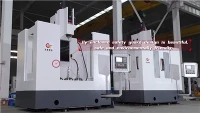
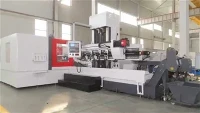
Dezhou Guanlu Precision Machinery Co.,Ltd is founded in 2011,its main business is manufacturing: Gun drilling machine,deep hole drilling machine,BTA deep hole drilling machine,deep hole skiving burnishing machines,deep hole honing machines and toolings.Our factory had about 50 workers,10technical engineers,15000square meters workshop.

FAQ
Q: What is deep hole method?
Q: What is deep hole drilling used for?
Q: What type of drill is used for deep holes?
Depending on the depth and diameter of the hole needing to be drilled, the BTA tooling will consist of a hollow drill tube that it attached to a threaded indexable cutter head. BTA drilling has an effective diameter range of 20-200mm (0.80″-8.00″) and can reach depths of up to 400mm (16.00″).
Q: How do I choose a good drill machine?
Q: What should the coolant pressure be on a gun drill?
Q: What size drill is most useful?
Q: Would speed or torque be better for drilling?
Q: What makes a drill more powerful?
Q: What are the three types of drilling methods?
Q: What are the three types of drilling machines?
Q: What is a deep hole drilling machine?
Q: What are the categories of drilling machines?
Q: What are the four main types of drilling?
Q: Which types of drills are known as deep hole drills?
Q: What are the different types of deep drilling?
Single-lip deep hole drilling. Principle of single-lip deep hole drilling. ...
BTA deep hole drilling. Principle of the BTA deep hole drilling method. ...
Ejector deep hole drilling. Process principle for ejector deep hole drilling.
Q: What are the methods of deep hole drilling?
The classic deep hole drilling processes are single-lip drilling, STS drilling and ejector drilling. These processes are all based on an asymmetrical tool design and differ predominantly in the supply of cooling lubricant and in the removal of the mixture of cooling lubricant and chips (swarf).
Q: What is the most common drilling machine?
Q: Which type of drilling machine does a carpenter use?
Q: What are the two most common types of drilling method?
Q: What are the six 6 operations that are commonly performed on drilling machines?
As one of the leading deep hole tools manufacturers and suppliers in China, we warmly welcome you to wholesale cheap deep hole tools for sale here from our factory. All customized products are with high quality and competitive price.
