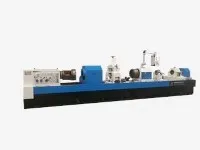


Deep hole processing has been widely used in the mold industry to solve the pores and long holes that cannot be solved by ordinary drilling machines in mold processing. Effectively reduce the processing cost of the mold. Undertake the most sophisticated deep hole machining, the diameter of 3-35 can be 2600. The water path hole, the oil path hole, the air hole, the single inclined hole, the double inclined hole, the filature wire through hole, the thimble hole and the like in the mold are solved to the utmost.
Deep hole machining is a hole in which the length of the hole is larger than the diameter of the hole by more than 5. Deep hole processing generally deep hole in most cases depth to diameter ratio L / d ≥ 100. Such as cylinder hole, axial oil hole of the shaft, hollow spindle hole and hydraulic valve hole, etc. Some of these holes require high machining accuracy and surface quality, and some of the materials to be processed have poor machinability, which often becomes a major problem in production.
Deep hole problem handling:
●The center line of the hole after the reaming is not straight
Cause: The hole in front of the reaming is skewed, especially when the hole diameter is small, because the rigidity of the reamer is poor, the original bending degree cannot be corrected; the deep hole processing manufacturer points out that the main yaw angle of the reamer is too large; The reamer is easy to deviate from the direction in the reaming; the inverted cone of the cutting part is too large; the reamer is displaced at the middle gap of the intermittent hole; when the hand reaming, the force is too large in one direction, forcing the reamer to deflect toward one end, The verticality of the reaming is broken.
Solution: increase the hole reaming or boring process correction hole; reduce the main yaw angle; adjust the appropriate reamer; exchange the reamer with the guiding part or lengthened cutting part; pay attention to correct operation.
●The life of the reamer is low
Cause: The reamer material is not suitable; the reamer burns during sharpening; the cutting fluid is not properly selected, the cutting fluid does not flow smoothly, and the surface roughness value at the cutting point and the reaming edge is too high.
Solution: Select the reamer material according to the processing material, use hard alloy reamer or coating reamer; strictly control the amount of sharpening cutting to avoid burns; often select the cutting fluid according to the processing materials; often remove the chips in the chip flute Use a cutting fluid of sufficient pressure to achieve the desired grinding or grinding.